Two designs, one population
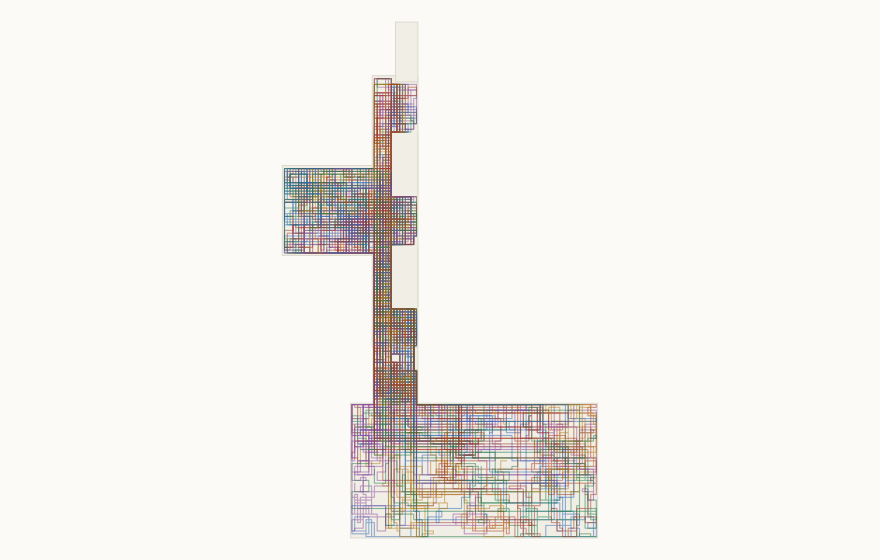
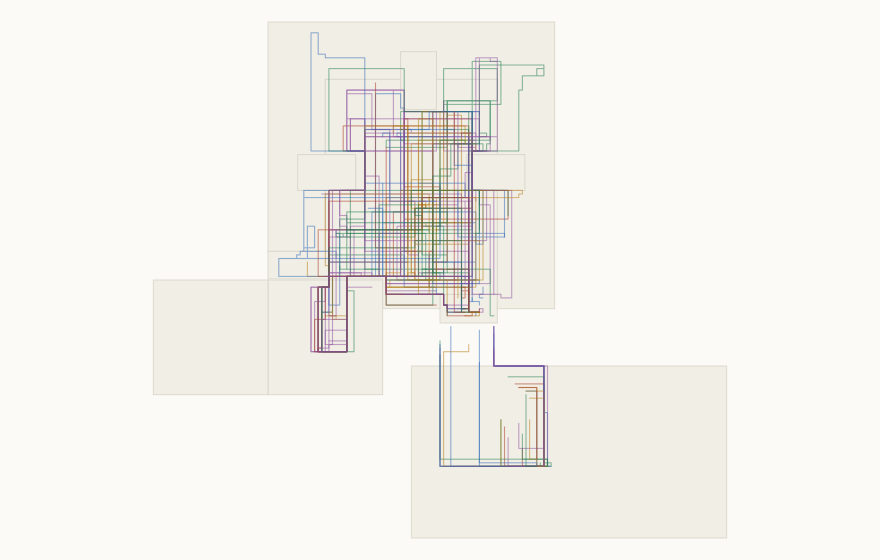
Same thirty-six inhabitants — identical personalities, identical schedules — living a full day in two different buildings drawn for the same brief. Everything that differs below, the architecture did.
A and B run on the next-generation continuous-space engine (the platform viewer). M1, by contrast, is the original tile-based replay of Paper 1.
The two plans
Corridor type
Linear corridors, one canteen. Life anchors deep inside each group's own territory; encounters across groups concentrate into a single room at particular hours.
Cluster type + a shared centre
Clusters give each group a home; a two-storey shared centre pulls all of them into one room. Mixing happens where the building funnels everyone together.
What differed
- Trajectories
In the corridor plan, movement stays within a group's territory; in the cluster plan, paths repeatedly cross the shared centre.
- Conversations
Talk across groups is scarce in the corridor layout; the shared centre is where different groups actually meet.
- No script
Nothing here is scripted. These are the paths and conversations the run actually produced.
Trajectories on the plan