A building's social life can be read from the drawing, before it is built.
The founding study. Five patterns from one building: how a home base forms, how a group's clustering splits into spatial causes (encounter), how one room gets appropriated for several uses, how a topic crosses a boundary (diffusion), and how behaviour shifts from day to day (adaptation).
Every M1 replay on the Evidence page is raw output from this run — nothing edited, nothing staged. The abstract and the three-seed research data are open on the paper page. Paper page & data → · See the replays →
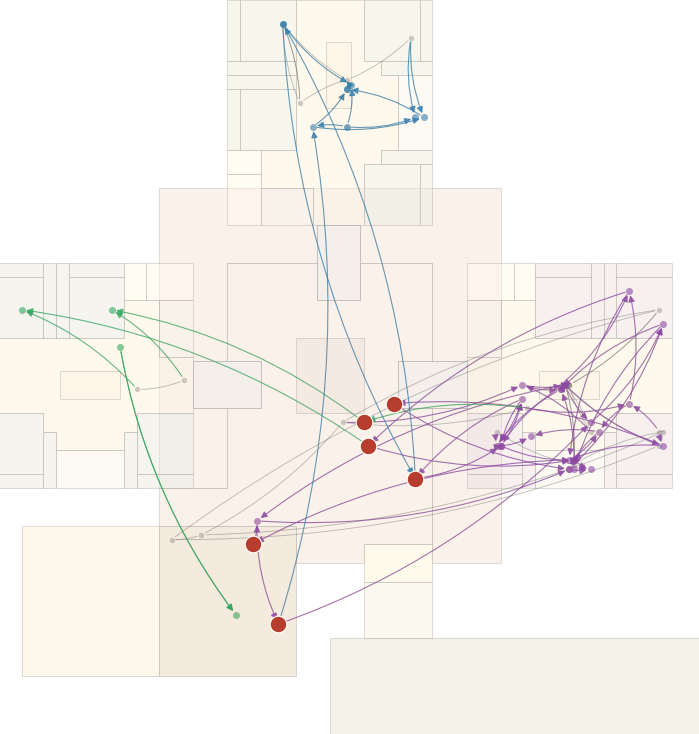
Day 2 of a three-day run. Each arrow is one person moving between talks about the same topic, coloured by group; a red dot marks where two groups met and it crossed over.
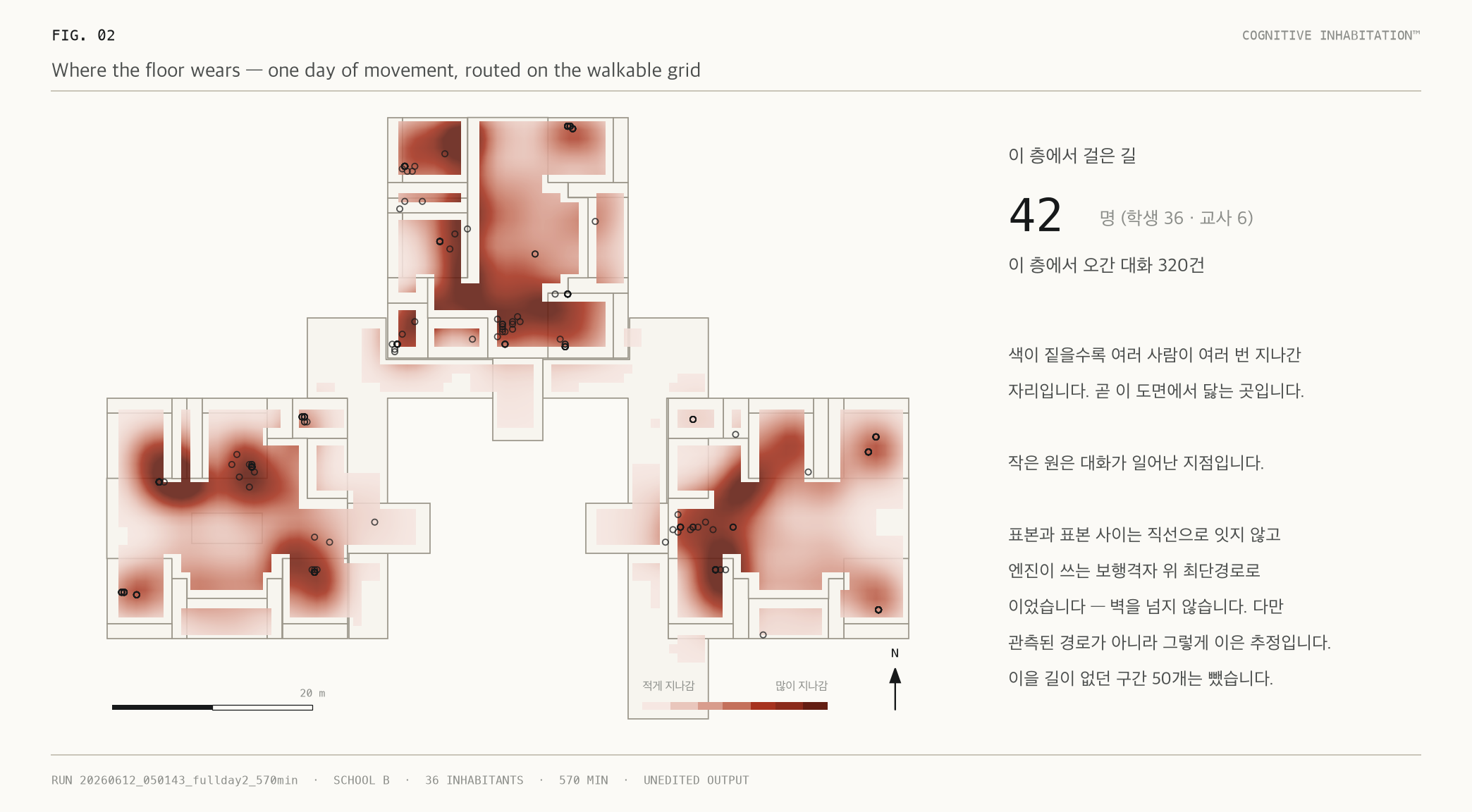
One day on the classroom floor. The darker the shading, the more people passed there more often — the routes this plan actually wears in. Between samples the path is routed on the walkable grid, so no line crosses a wall; it is an inferred route, not an observed one.
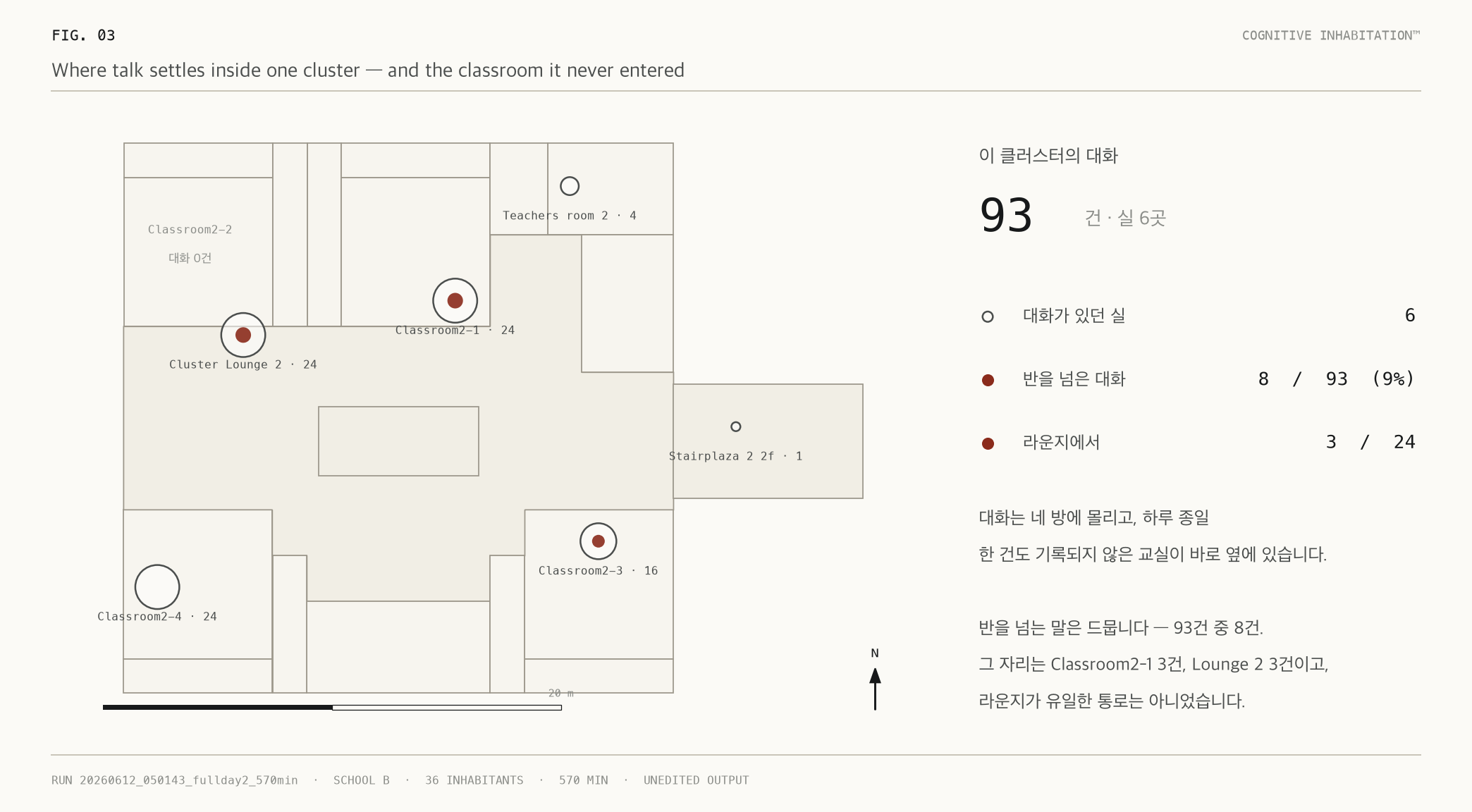
One cluster of the upper floor. Circle area is the number of conversations recorded in that room; the brick core is the share that crossed a class. Ninety-three conversations gathered in four rooms — and one classroom recorded none at all.